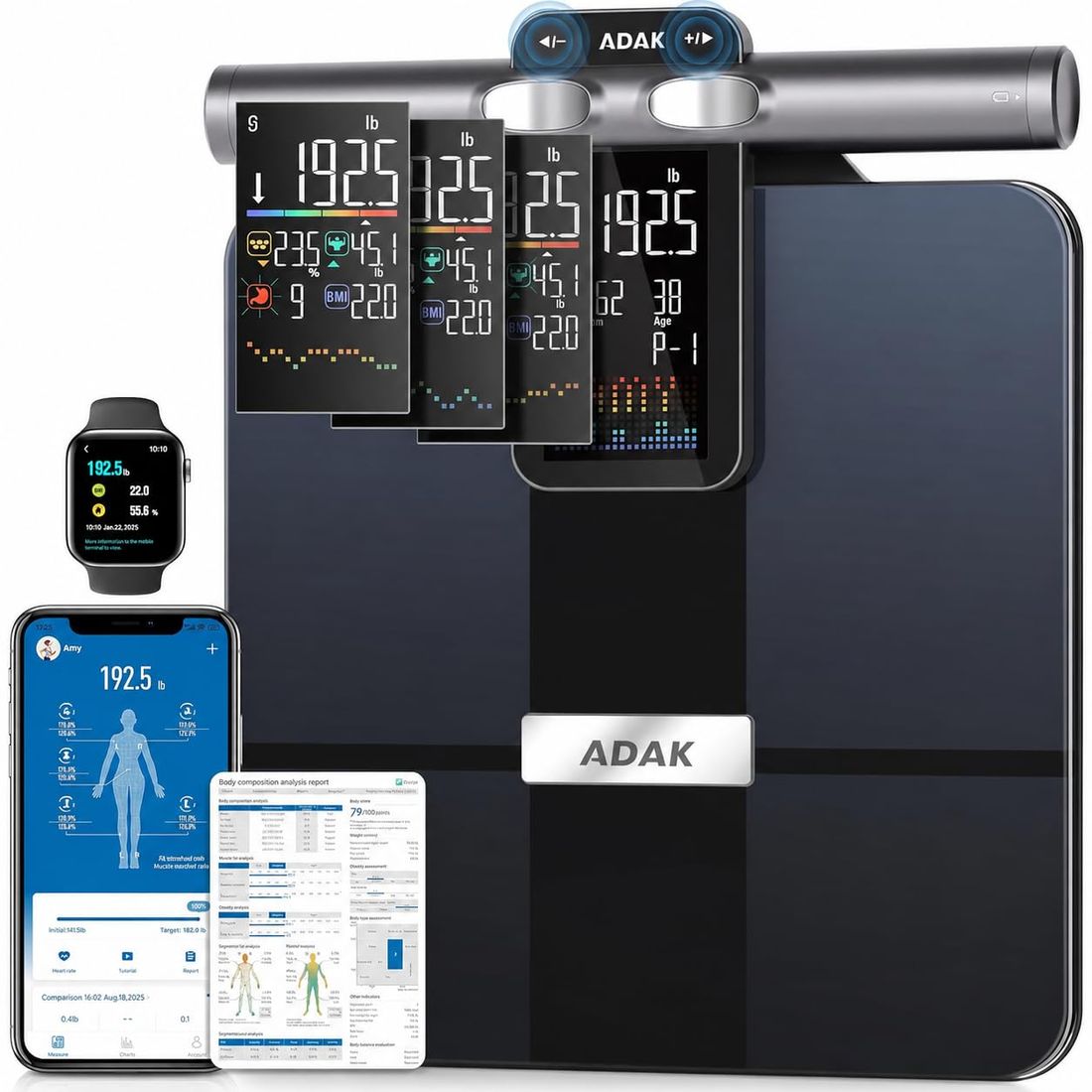
BMI (body mass index) is the number most people know, and body fat percentage is the one most people care about. They are related — but they answer different questions.
What BMI measures
BMI is your weight in kilograms divided by your height in metres squared. It is fast, free and useful for looking at large populations. But it only uses weight and height, so it cannot tell whether that weight is muscle, fat, bone or water.
That is why a muscular athlete can have a “high” BMI while being lean, and someone with little muscle can have a “normal” BMI while carrying more body fat than is healthy.
What body fat percentage measures
Body fat percentage estimates how much of your total weight is fat mass. Smart scales and analyzers estimate it using bioelectrical impedance. It gives a much more direct picture of body composition — especially when you are changing your training or diet.
Muscle mass and visceral fat
Two other readings are worth watching:
- Muscle mass — rising muscle supports strength, metabolism and healthy ageing.
- Visceral fat level — an estimate of fat stored around internal organs. Many people aim to keep this in the device’s healthy range.
How to use them together
| Metric | Best for | Limitation |
|---|---|---|
| Weight | Daily trend | Mixes fat, muscle and water |
| BMI | Quick screening | Can’t tell muscle from fat |
| Body fat % | Tracking composition | Estimate; affected by hydration |
| Circumference | Shape change | Needs consistent technique |
The best approach is to track several together, on the same devices and under the same conditions. If body fat trends down and muscle trends up, you are moving in the right direction — whatever BMI says.
This article is for general information and is not medical advice. Speak to a healthcare professional about targets that are right for you.