If you have ever trained hard for a month and seen the scale barely move, you are not alone. When you gain muscle and lose fat at the same time, your weight can stay flat while your shape changes a lot. That is why body circumference measurements are one of the most useful — and underrated — progress tools.
What you need
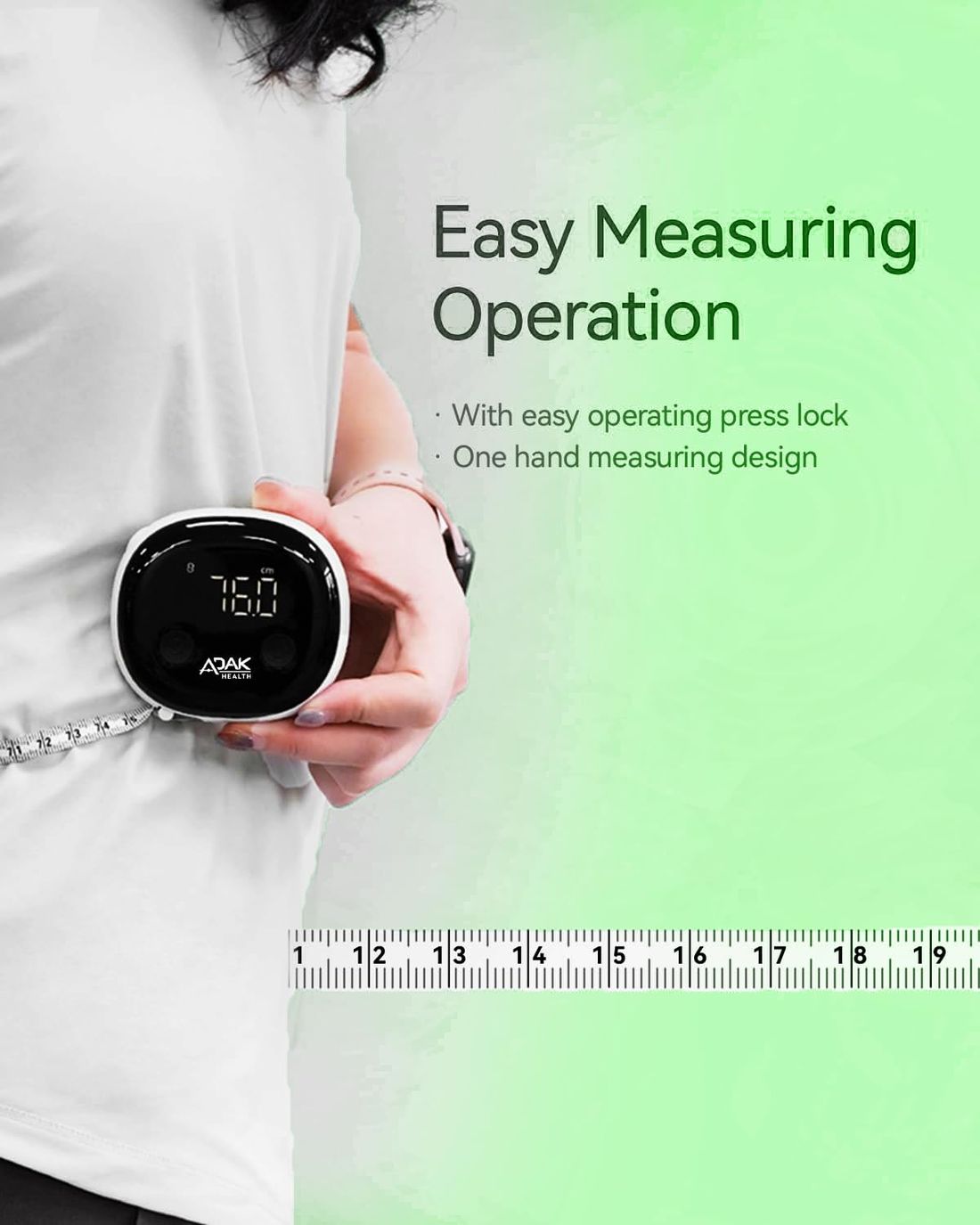
A flexible tape measure, a mirror and two minutes. A smart tape such as the ADAK Smart Body Measuring Tape makes it easier: it reads digitally to 0.1 cm, locks with one hand and saves every measurement in the app.
General rules
- Measure on bare skin or thin clothing, standing relaxed.
- Keep the tape level and snug — touching the skin without pressing in.
- Breathe out normally before reading waist and abdomen measurements.
- Measure at the same time of day, ideally in the morning, once every one or two weeks.
Where to measure
| Site | How to find it |
|---|---|
| Neck | Just below the Adam’s apple, tape sloping slightly down to the front. |
| Chest | Around the fullest part of the chest, under the arms, tape level across the back. |
| Waist | Midway between the bottom of your lowest rib and the top of your hip bone. |
| Hips | Around the widest part of the buttocks, feet together. |
| Upper arm | Midway between shoulder and elbow, arm relaxed by your side. |
| Thigh | Around the thickest part of the upper thigh, weight on both legs. |
| Calf | Around the widest part of the calf while standing. |
Waist-to-hip ratio
Divide your waist measurement by your hip measurement. Many health organisations use waist size and waist-to-hip ratio as simple indicators of how body fat is distributed. The ADAK app calculates this for you automatically.
Measure consistently, not obsessively. One accurate measurement every two weeks tells you more than daily guesses.
Turn numbers into progress
Pair circumference with weight and body composition from your smart scale. If your weight is flat but your waist is shrinking and arm measurement is growing, you are recomposing — exactly what most training plans aim for.